
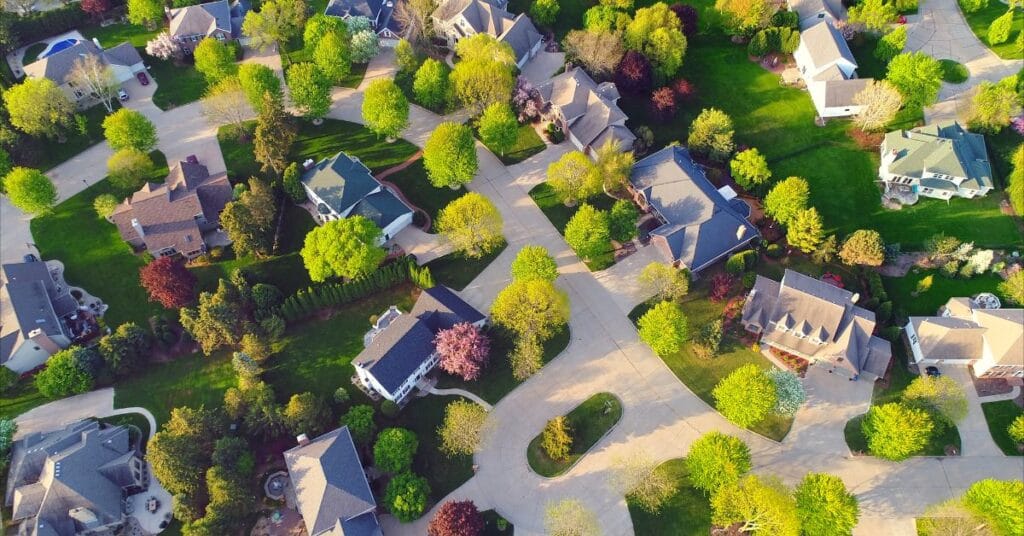
HOA and Neighborhood Landscaping
When we think about home value, we usually focus on what’s inside our own property lines—a newly renovated kitchen, a pristine paver patio, or a custom backyard oasis. But the truth is, the financial value of your home starts long before anyone pulls into your driveway. It begins the moment a driver turns past the main entrance monument.
In the competitive Greater Louisville and Southern Indiana real estate markets, neighborhood landscaping is the silent factor that sets the tone for an entire community. For homeowners trying to protect their investments and HOA board members managing an annual budget, understanding the impact of premium HOA landscaping is the key to building a desirable, high-value place to live.
Here is a deep dive into why investing in unified, professional community landscaping is an absolute must for Kentuckiana subdivisions.
1. The Power of “Shared Curb Appeal”
You can have the most beautiful home on the block, but if the neighborhood entrance is overgrown, the medians are choked with weeds, and the common areas look neglected, it drags down the perceived value of every house in the zip code.
Property appraisers and real estate experts agree that cohesive community spaces can boost individual home values by up to 10% to 15%. When prospective buyers drive through a subdivision with beautifully uniform street trees, pristine turf management, and vibrant seasonal color displays at the front gates, it sends an immediate psychological cue. It signals that the community is safe, highly desirable, and meticulously cared for. High-quality neighborhood landscaping ensures that the first impression is always a luxury impression.
2. The Nuances of Successful HOA Landscaping
Managing a residential community comes with unique challenges that regular residential lawn care just can’t solve. HOA landscaping requires a strategic balance between aesthetic beauty, long-term durability, and fiscal responsibility.
A professional landscape partner doesn’t just mow the grass; they manage the entire asset ecosystem of the neighborhood. This includes:
- Entrance Monument Design: Cultivating an elegant entrance that serves as a landmark for the community.
- Retention Pond and Basin Management: Ensuring that neighborhood water features remain beautiful, clear, and free of invasive weeds or erosion.
- Common Area Turf Programs: Implementing strict fertilization, weed control, and aeration schedules so shared parks and playgrounds remain lush and green under heavy foot traffic.
3. Low-Maintenance, High-Impact Plant Choices for the Ohio Valley
Neighborhood common areas endure an incredible amount of environmental stress—from heavy road salt and freezing moisture in damp Kentuckiana winters to brutal, baking asphalt heat during our humid summers. Individual homeowners shouldn’t have to guess what survives.
Smart neighborhood landscaping relies on durable, native, and structurally striking plants that look great year-round with minimal upkeep. Great choices for local HOAs include:
- Redbuds and Dogwoods: For stunning spring blooms that welcome residents home and thrive in our regional climate.
- Little Lime and Oakleaf Hydrangeas: For massive summer color that stands up to intense July and August heat.
- Ornamental Grasses (like Switchgrass or Muhly Grass): For low-maintenance texture, erosion control, and structural interest along medians during the winter months.
- Evergreen Screenings (like Green Giant Arborvitae): Perfect for buffering the neighborhood from busy local roads or nearby commercial properties.
4. Solving Practical Issues: Safety, Liability, and Drainage
Great HOA landscaping isn’t just about planting pretty flowers; it’s about engineering a safe and functional environment. Neglected trees and shrubs quickly turn from eye sores into massive liabilities for a neighborhood association.
- Sightline Clearance: Overgrown bushes near intersection corners create dangerous blind spots for drivers and children playing. Regular pruning keeps sightlines clear.
- Tree Canopy Safety: Dead or dying tree limbs over sidewalks and common walking paths pose severe safety hazards. Proactive tree care protects residents and shields the HOA from liability.
- Stormwater Management: The Ohio Valley is notorious for heavy spring downpours and flash summer storms. Professionally managed neighborhood landscaping incorporates functional drainage solutions—like strategically placed bioswales, rain gardens, and French drains—to prevent standing water from eroding common ground or flooding residential basements.
The HOA Advantage: Streamlining Your Vendor Management
For HOA board members, managing multiple contractors for mowing, tree trimming, irrigation, and snow removal is a logistical headache. Partnering with a comprehensive design-build and maintenance firm ensures that your neighborhood’s entrances, retention ponds, and common areas are handled by a single, accountable team that understands the seasonal rhythm of the Kentuckiana region.
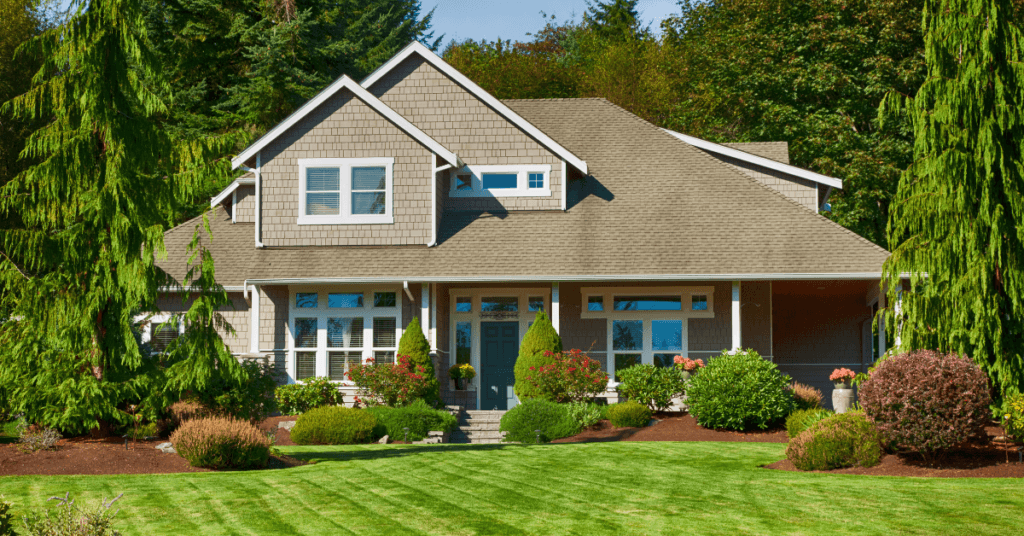
Frequently Asked Questions About HOA & Neighborhood Landscaping
How much should an HOA allocate for neighborhood landscaping?
While every subdivision is unique, most spend $2,500-$6,000 of their total annual operating budget toward neighborhood landscaping and grounds maintenance. This typically covers weekly mowing, seasonal color rotations, fertilization, irrigation upkeep, and a reserve fund for emergency tree removal or major entrance landscape renovations.
Does the HOA or the homeowner own the trees between the sidewalk and the street?
This depends entirely on your specific neighborhood’s covenants, conditions, and restrictions (CC&Rs). In many Kentuckiana subdivisions, the trees planted in the grass strip between the sidewalk and the curb are located on the city or county right-of-way, but the homeowner is legally responsible for maintaining them. However, some master-planned communities handle street-tree trimming uniformly through HOA landscaping funds to ensure visual consistency and safety clearance. Always check your community’s bylaws to verify property lines.
What is the best time of year for an HOA to switch landscaping companies?
The absolute best time for an HOA board to bid out their contract and switch vendors is late autumn (October through December). Most professional landscape firms wrap up their heavy maintenance seasons by November and begin planning their crews and routes for the upcoming spring. Bidding your contract early ensures you secure a spot on the schedule, locks in competitive pricing, and allows the new team to handle winter pruning and early spring cleanup smoothly.
How does community landscaping protect an HOA from liability?
Neglected landscapes are safety hazards. Proactive HOA landscaping includes routine dead-wooding (removing dangerous dead tree branches), clearing sightlines at blind intersections, leveling uneven roots that buckle public sidewalks, and managing retention pond slopes to prevent dangerous soil cave-ins. Keeping up with regular maintenance drastically reduces the risk of property damage or personal injury lawsuits against the association.
Ready to Elevate Your Community’s Curb Appeal?
Whether your neighborhood needs a complete entrance redesign, a long-term master plan for street-tree replacement, or reliable, commercial-grade maintenance that keeps the whole subdivision looking sharp, Walnut Ridge Landscape & Design is here to help. We bridge the gap between structural landscape architecture and pristine seasonal care.
Click here to schedule a comprehensive HOA landscaping consultation for your neighborhood today, or call us at 1-812-289-6630 to speak with a commercial landscape professional.
 2108 Hamburg Pike, Jeffersonville,IN 47130,United States