
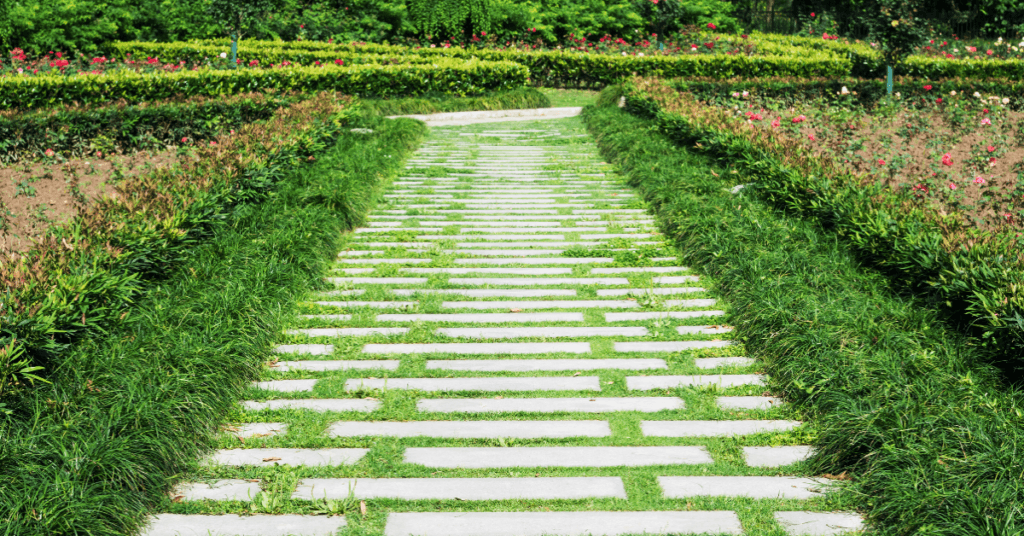
The sidewalk is the first part of your property anyone sees up close. Neighbors walk it every day, guests follow it to your door, and buyers judge your home from it before they ever step inside. Even so, it’s often the most neglected strip of the yard: patchy grass, eroding edges, and plants that looked great in May and gave up by August.
It doesn’t take a full renovation to fix that. A defined edge, the right plants, and a little planning for winter can turn a forgettable strip into beautiful landscaping along your sidewalk. Below are the sidewalk landscaping ideas our team relies on across Louisville and Southern Indiana, including plants that hold up to road salt and a section on plantings that keep looking good through fall and winter.
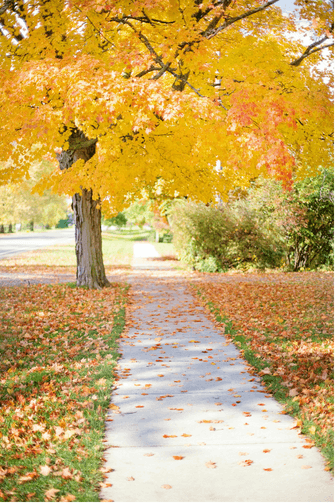
7 Sidewalk Landscaping Ideas
1. Start with a clean, defined edge
Nothing makes a walkway look sharper than a crisp line between the path and the planting bed. Paver or natural stone borders, steel edging, or a simple hand-cut trench edge all keep mulch off the concrete and grass out of the beds. If you only do one thing this year, do this.
2. Frame the walk with a low border planting
A continuous row of one or two low plants along the sidewalk reads as intentional and tidy. Keep plants in this zone under about two feet so they don’t flop onto the path or block the view of your home. Boxwood alternatives, dwarf grasses, and compact perennials all work well here.
3. Replace the struggling grass strip
Grass between the sidewalk and street gets compacted, salted, and hard to mow. Swapping it for a low-maintenance planting bed or a mix of groundcover and decorative stone can solve the problem for good. (See “Before you plant” below, since this strip is often public right-of-way.)
4. Use repetition instead of variety
A sidewalk bed with fifteen different plants looks busy. Choose three to five plants and repeat them along the length of the walk. Repetition makes a small space look designed and simplifies maintenance.
5. Front Walkway Landscaping Ideas: Upgrade the Walkway Itself.
Sometimes the plants aren’t the problem; the walk is. Widening a narrow front path with paver bands, adding a landing at the steps, or replacing cracked concrete with pavers or natural stone changes the whole entry. This is where hardscaping and planting work best together.
6. Add low landscape lighting
Path lights or small uplights along the walk add safety in the dark months and show off your plantings after sunset. Keep fixtures low and spaced so they light the path without making it look like a runway.
7. Layer for height away from the path
Put the lowest plants at the sidewalk edge and step up in height as you move toward the house. This keeps the path clear, gives the bed depth, and lets taller shrubs and small trees frame the view of your front door.
Low-Maintenance Plants Along a Sidewalk That Handle Road Salt
Plants along a sidewalk deal with things the rest of your yard doesn’t: reflected heat off concrete in summer, foot traffic, and de-icing salt splashed onto beds every winter. These plants handle those conditions well in the Kentuckiana climate and need little care once established.
| Plant | Type | Typical height | Why it works along a sidewalk |
| Little bluestem | Native grass | 2 to 3 ft | Tolerates salt and dry soil; turns copper-red in fall |
| Switchgrass (compact varieties) | Native grass | 3 to 4 ft | Salt tolerant; holds its shape through winter |
| Autumn Joy sedum | Perennial | 1.5 to 2 ft | Handles heat, drought, and salt; late-season blooms |
| Daylily | Perennial | 1 to 2 ft | Tough, salt tolerant, and nearly impossible to kill |
| Russian sage | Perennial | 3 to 4 ft | Thrives in hot, dry spots; best set back from the path |
| Creeping juniper | Evergreen groundcover | Under 1 ft | Year-round green that stays low and spreads |
A few tips for keeping sidewalk beds low maintenance:
- Mulch beds to hold moisture and block weeds, but keep mulch a few inches below the walkway so it doesn’t wash onto the concrete.
- Leave a small buffer between the path and your most salt-sensitive plants.
- Choose a de-icer labeled safer for plants, such as calcium magnesium acetate, when you can, and shovel before salting to reduce how much you need.
Sidewalk Plantings That Still Look Good in Fall and Winter
A lot of sidewalk beds are built around summer flowers, which means they look empty from October through March. That’s nearly half the year. The fix is to plan for the off-season from the start, with plants that bring fall color, interesting structure, or evergreen foliage.
For fall color
- Fothergilla: A compact native shrub with yellow, orange, and red leaves in fall. A dwarf variety fits near the walk.
- Virginia sweetspire: Holds deep red fall foliage for weeks and handles a range of soil conditions.
- Little bluestem: Shifts from blue-green to copper and stays standing into winter.
For winter structure
- Ornamental grasses: Leave them standing until late winter. Their seed heads catch frost and snow, and they give birds cover.
- Oakleaf hydrangea: Dried flower heads and peeling bark keep it interesting after the leaves drop. Plant it back from the path, since it gets large.
- Sedum: Leave the dried flower heads on for winter texture, then cut back in early spring.
For color when everything else is bare
- Winterberry holly: Bright red berries on bare stems from late fall into winter. You’ll need a male pollinator plant nearby for berries.
- Dwarf evergreens: Compact conifers and creeping juniper anchor the bed so it never looks empty.
The simplest approach: give each sidewalk bed at least one evergreen, one plant with fall color, and one grass or perennial you leave standing through winter. That combination keeps the walk looking intentional in every season.
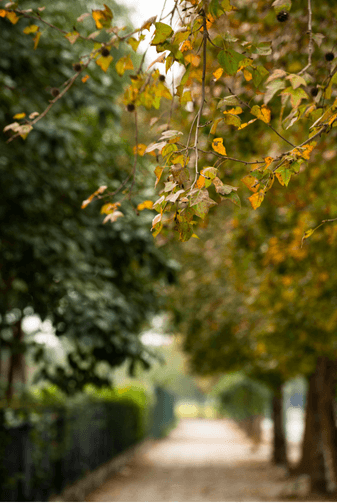
Fall is also a good time to plant many trees and shrubs here, because cooler air and warm soil help roots establish before spring. If your sidewalk beds need a refresh, our fall landscaping services post explains how we work this time of year.
Before You Plant Along the Sidewalk
A few checks up front will save you from redoing the work later.
- Know who owns the strip. The area between the sidewalk and street is often public right-of-way, even though you maintain it. Cities may limit what you can plant there, how tall it can grow, or whether you can plant trees. In Louisville, you need a permit to plant trees in the right-of-way, but small plants and shrubs are allowed, and in Jeffersonville they encourage planting but have some specific rules depending on spacing, those right-of-way rules are listed here! If you’re in an HOA, check its guidelines too.
- Call 811 before you dig. Utility lines often run near sidewalks and streets. The free 811 service marks them before any digging starts.
- Keep sightlines clear. Near driveways and corners, keep plantings low so drivers can see people on the sidewalk.
- Leave room for the path. Plan for each plant’s mature width, not its size in the pot, so you’re not trimming it back off the walk every month.
Frequently Asked Questions
What are the best low maintenance plants along a sidewalk?
Tough perennials and native grasses such as sedum, daylily, and little bluestem are hard to beat. They tolerate heat, dry soil, and road salt, and they need little more than a spring cutback.
How far from the sidewalk should I plant?
Plan around the plant’s mature width. Place low plants close to the edge and keep larger shrubs far enough back that they won’t grow over the walk.
Can I landscape the strip between the sidewalk and the street?
Often, yes, but that strip is usually public right-of-way with its own rules, Louisville’s right-of way information is here and Jeffersonville’s right-of-way information is here! Check with your city and HOA before planting, and call 811 before digging.
What are some simple front walkway landscaping ideas?
A clean edge, low border plants, and lighting.
Make Your Sidewalk the Best Part of Your Curb Appeal
Your sidewalk is a small space that does a lot of work. A clean edge, the right plants, and a plan for fall and winter will keep it looking good year-round. Every yard is different, and our team can design a sidewalk and front walkway plan that fits your home, your soil, and how much upkeep you want to take on.
Contact our design team today to schedule your consultation!
 2108 Hamburg Pike, Jeffersonville,IN 47130,United States